New Max Stack Size Feature
Protect fragile goods by setting precise stacking rules for every item
Stop Shipping Damage Before It Happens
Shipping fragile cargo? Our new Stack Capacity feature prevents costly damage by controlling exactly how many items can be stacked. Perfect for:
- Electronics - TVs, monitors, computers (no stacking)
- Glassware - Wine bottles, windows, mirrors (limited layers)
- Medical Equipment - Sensitive instruments, surgical tools
- Ceramics - Tiles, pottery, sanitaryware (weight limits)
- Artwork - Paintings, sculptures (individual protection)
Let's protect fragile electronics with stack limits:
                    Pack 75 fragile 55-inch TVs that cannot be stacked

with 150 cushioned accessories (max 3 high) in 20ft container
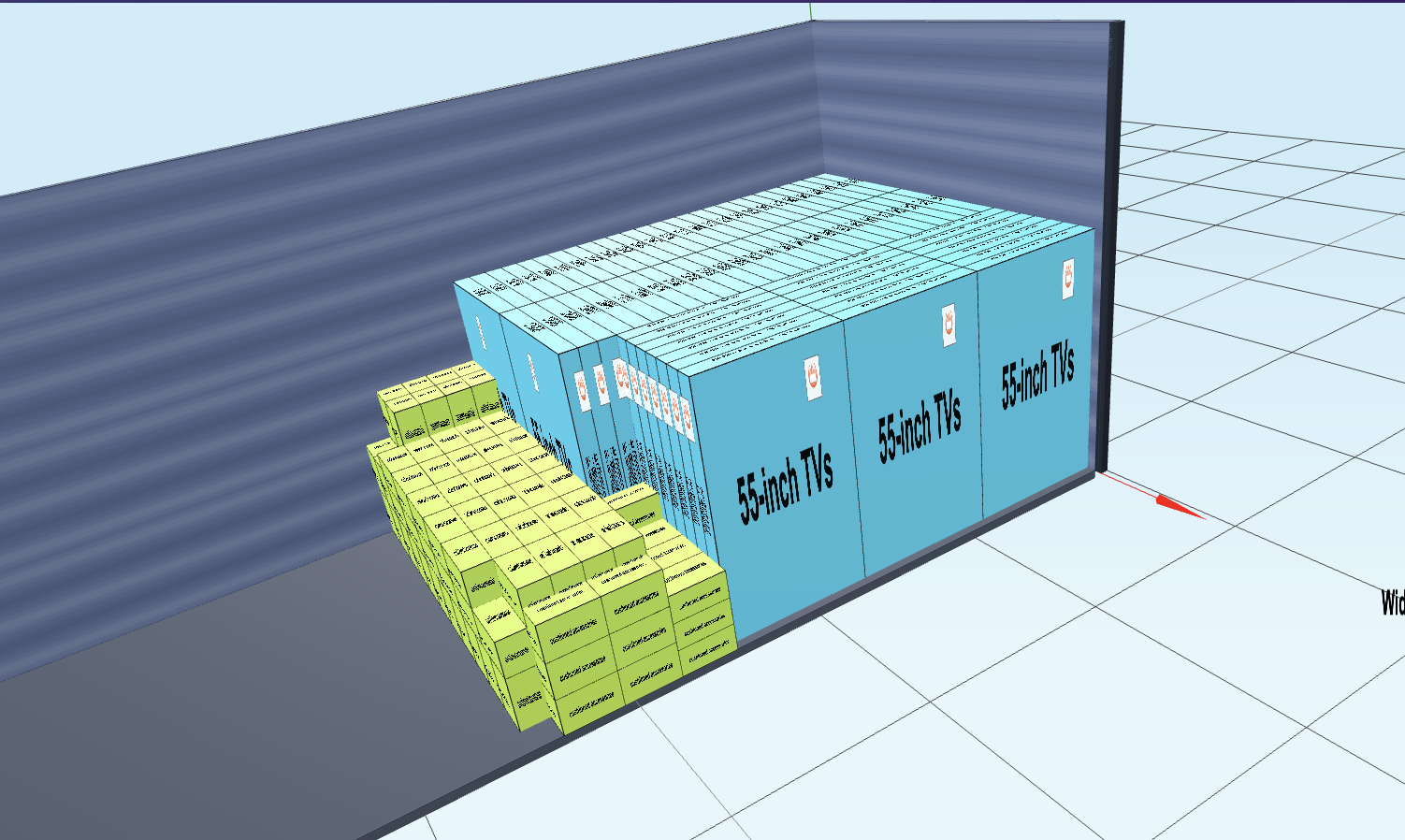
The AI understands "cannot be stacked" and sets stack capacity to 1, ensuring each TV is placed separately for maximum protection.
Wine Shipment Example
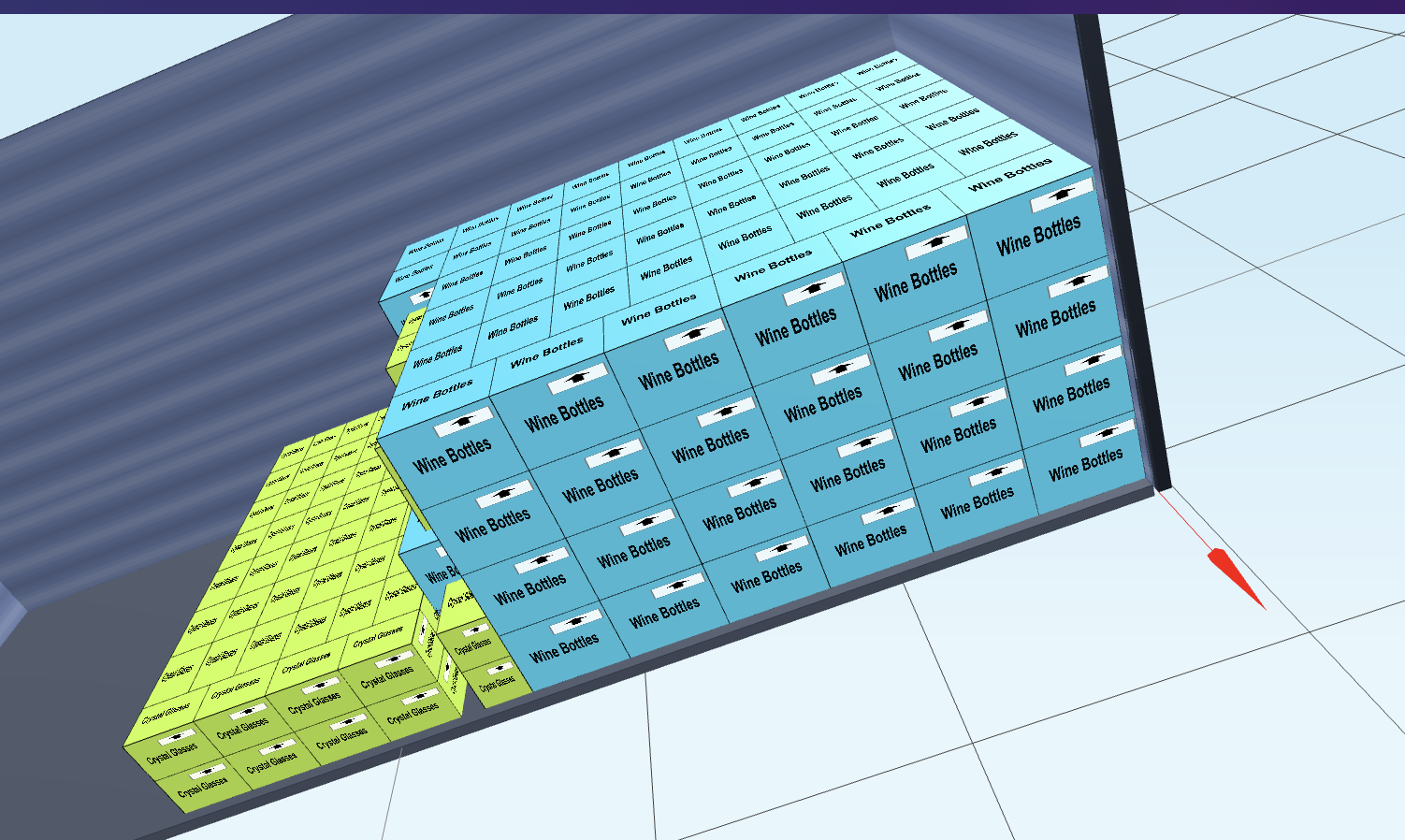
Shipping wine requires careful stacking limits:
                  In a 20 ft container,
Load wine shipment - bottles maximum 4 cases high, 200 bottles

fragile crystal glasses 2 layer only, each box is 20x30x20, 100 boxes

All keep upright
How Stack Capacity Values Work
- A value of 1 means NO stacking (the item must be on the floor)
- A value of 0 or leaving empty means UNLIMITED stacking (the default)
Understanding stack capacity values for fragile cargo:
- 0: Unlimited stacking (default for non-fragile items)
- 1: No stacking - critical for TVs, monitors, artwork
- 2-3: Limited stacking - wine cases, medical supplies
- 4-6: Moderate stacking - cushioned items, protected goods
Values are inclusive — a stack size of 4 allows a column of 4 boxes.
For a space estimate, use the free pallet calculator to check boxes per layer and height-based layer counts for one carton size. It does not verify carton compression strength; confirm permitted stacking limits with your packaging supplier before loading.
Real Results from Real Customers
"3DPACK.ING's stack capacity feature reduced our electronics damage claims by 94%. We ship 10,000 TVs monthly with confidence." - Major Electronics Retailer
"Wine shipment breakage dropped from 8% to 0.3% after implementing proper stack limits." - International Wine Exporter
How to Use It
Option 1: Natural Language Input
Just describe your stacking rules in plain English:
                    "Fragile glassware that cannot be stacked"

                    "Electronic devices no stacking allowed"

                    "Ceramic tiles stack up to 2 high only"

                    "Wine boxes maximum 3 layers high"
Option 2: Table Upload (CSV/Excel)
Add a "Max Stack Size" column to your spreadsheet:

Why the number on the box is not the number you get
Carton strength is measured as box compression, and the figure a supplier quotes is for a new, dry, perfectly aligned box under a load applied briefly in a laboratory. Real cargo meets none of those conditions, and each departure costs strength.
Humidity is the largest single factor: corrugated board is hygroscopic, and a carton held in a humid warehouse or a sea container crossing the tropics retains a substantially smaller fraction of its rated strength than the same box in a dry test room. Time is the second — board creeps under sustained load, so a stack that is stable on the day it is built can settle over a long transit. Alignment is the third and the most avoidable: compression strength lives in the vertical corners of the box, so a stack whose corners line up carries far more than one where each layer is offset by a few centimetres.
This is why stacking guidance is expressed as a safety factor rather than a limit. Taking a fraction of the rated compression figure, rather than the figure itself, is not conservatism; it is the correction for the conditions the rating did not cover.
Overhang, and the cost of a few centimetres
The most expensive mistake in palletised stacking is cargo that extends past the pallet edge. A box whose corner hangs over the edge has no pallet under the part of it that carries the load, and the strength loss is out of all proportion to the overhang — precisely because it is the corners doing the work.
It also changes the footprint the container sees, which is why published pallet counts and real ones disagree. The pallets per container guide covers the standard footprints and the counts that follow from them, and overhang is the first thing that makes those counts optimistic.
Stack limits interact with loading order too. A plan that respects every limit but scatters each product through the container gets unloaded slowly and restacked on the dock — see why a fuller container can be the worse plan for how we measure that, and why density alone is a poor target.
Start Protecting Your Cargo Today
You can define stacking rules your way — either by typing what you want or by adding a column to your upload file. Ready to optimize for safety as well as space?
Optimize Your First Shipment